Cardio-pulmonary rehabilitation is more than just structured exercise; it’s a scientifically backed pathway to regain your quality of life after heart or lung issues. This article explores how tailored rehabilitation improves endurance, breathing, and overall well-being, offering a true second chance for your heart and lungs.
The heart and lungs are two of the most vital organs in the human body. When they falter, life doesn’t just slow down—it can come to a screeching halt. However, thanks to advancements in medical science and rehabilitation practices, there’s now a proven way to bounce back stronger: cardio-pulmonary rehabilitation. Whether you’re recovering from a heart attack, managing chronic obstructive pulmonary disease (COPD), or simply aiming to restore your stamina and lung capacity, cardio-pulmonary rehab can be your lifeline to better health.
What is Cardio-Pulmonary Rehabilitation?
Cardio-pulmonary rehabilitation (CPR) is a structured, multidisciplinary program designed for individuals with heart and lung diseases. It combines exercise training, education, behavioral modification, and counseling to enhance cardiovascular and pulmonary health.
This form of therapy isn’t a quick fix. Instead, it offers a long-term approach to managing and improving the conditions of patients with:
- Coronary artery disease (CAD)
- Chronic heart failure
- Post-cardiac surgery recovery
- COPD
- Pulmonary fibrosis
- Asthma and other respiratory diseases
Cardio-pulmonary rehabilitation gives your body a second chance to heal and adapt, improving not just lifespan but the quality of life.
The Science Behind the Program
A damaged heart or impaired lungs can no longer function at full capacity. This leads to symptoms such as:
- Breathlessness
- Fatigue
- Chest discomfort
- Limited exercise tolerance
Cardio-pulmonary rehab works by gradually pushing the body’s limits in a controlled, monitored environment. Through aerobic exercises, resistance training, and breathing techniques, the heart and lungs are retrained to operate more efficiently.
Key physiological benefits include:
- Improved oxygen uptake and delivery
- Reduced heart workload
- Strengthened respiratory muscles
- Increased circulation
- Enhanced mitochondrial function (cellular energy production)
With regular participation, the body starts to adapt. Heart rate normalizes, oxygen levels improve, and endurance levels increase.
Components of Cardio-Pulmonary Rehabilitation
1. Medical Evaluation
Before starting, a thorough assessment is done, which includes:
- Stress tests
- Pulmonary function tests
- Echocardiograms
- Oxygen saturation measurement
This ensures that the rehab plan is safe and personalized for each individual.
2. Exercise Training
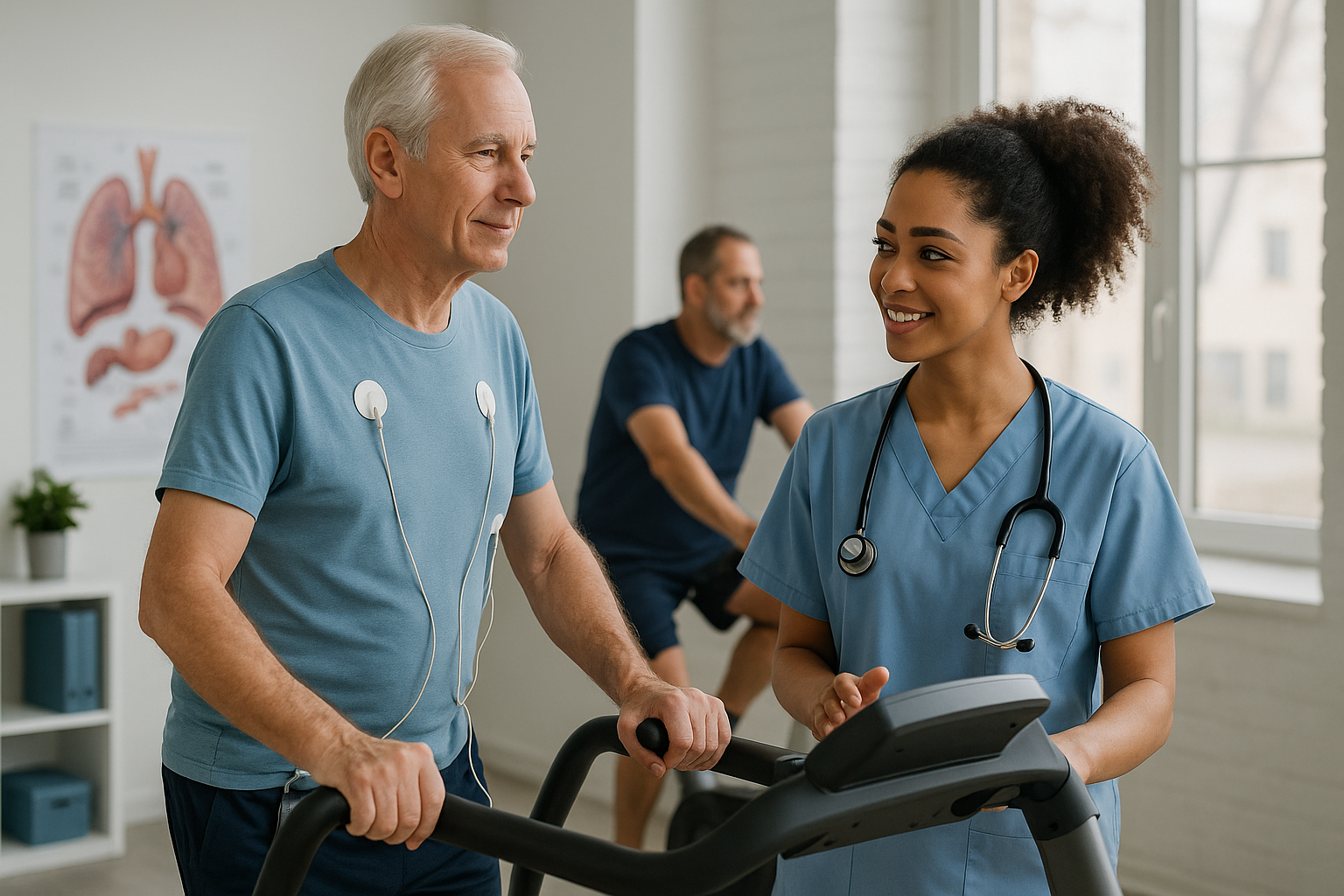
The cornerstone of CPR. The intensity and type of exercises depend on your condition but usually include:
- Treadmill walking
- Stationary cycling
- Arm ergometry
- Resistance training
- Breathing exercises
These sessions are usually supervised by a team of professionals including physiotherapists, cardiologists, and respiratory therapists.
3. Breathing Techniques
For pulmonary patients, learning how to breathe effectively is crucial. Techniques may include:
- Pursed-lip breathing
- Diaphragmatic breathing
- Inspiratory muscle training
These techniques help reduce dyspnea (breathlessness) and improve oxygenation.
4. Lifestyle Modification
Education sessions help patients make essential changes such as:
- Quitting smoking
- Reducing salt and cholesterol intake
- Managing diabetes and hypertension
- Weight loss programs
5. Psychosocial Support
Living with heart or lung disease can take a mental toll. CPR includes counseling and group support to address:
- Anxiety
- Depression
- Fear of relapse
- Motivation and adherence
Who Should Consider Cardio-Pulmonary Rehab?
If you’ve had or are dealing with any of the following, CPR is likely right for you:
- Heart attack
- Angina
- Coronary bypass surgery
- Heart valve surgery
- Heart failure
- Lung transplantation
- COPD
- Interstitial lung disease
- Long COVID with cardiopulmonary complications
Even elderly patients or those with multiple comorbidities can benefit significantly under professional guidance.
Benefits You Can Expect
Patients often experience measurable improvements in a matter of weeks. Here’s what you can look forward to:
- Increased exercise tolerance
- Better oxygen levels
- Less shortness of breath
- Lower blood pressure and resting heart rate
- Improved lipid profile
- Reduced hospital readmissions
- Improved mental health
- Enhanced confidence and independence
A study in the Journal of Cardiopulmonary Rehabilitation revealed that consistent participation reduced all-cause mortality in heart disease patients by up to 30%.
Cardio-Pulmonary Rehab vs. General Exercise
It’s important to note that CPR is not the same as going to the gym or following YouTube workout videos. General exercise lacks the clinical supervision, risk assessment, and targeted interventions that CPR offers.
In cardio-pulmonary rehab:
- Heart rate and oxygen saturation are continuously monitored
- Medical emergencies can be managed instantly
- Programs are adjusted based on progress and setbacks
- It is safe for those who otherwise wouldn’t be able to exercise
Addressing Common Myths
❌ Myth 1: “I’m too old for rehab.”
✅ Fact: Age is not a barrier. In fact, older adults often experience life-changing benefits through improved mobility and independence.
❌ Myth 2: “I feel better, I don’t need it anymore.”
✅ Fact: CPR is a preventive and maintenance tool. Even if symptoms subside, underlying conditions may persist. Rehab helps you avoid future complications.
❌ Myth 3: “I can do this on my own at home.”
✅ Fact: Without supervision, there’s a risk of overexertion or missed signs of distress. CPR offers a safe and structured path to recovery.
What to Expect from a Typical Program
Most programs last from 6 to 12 weeks, with 2-3 sessions per week. After the initial phase, a home-based maintenance plan is provided to continue progress.
You’ll likely be part of a supportive community of peers who share similar struggles and victories, helping boost motivation.
Moving Forward: Life After Rehab
Graduating from a cardio-pulmonary rehabilitation program isn’t the end—it’s the beginning of a new, healthier chapter. You’ll be better equipped to:
- Handle daily physical activities
- Return to work or hobbies
- Manage symptoms and emergencies
- Avoid hospitalizations
- Maintain heart and lung health for the long term
But the key lies in consistency. Maintaining what you’ve gained requires ongoing commitment to physical activity, a healthy lifestyle, and periodic checkups.
Final Thoughts
Cardio-pulmonary rehabilitation is not just a medical intervention—it’s a second chance. A second chance to walk without panting, to climb stairs without pain, to hug your loved ones without fear. If you or someone you know is struggling with heart or lung issues, remember: there is a proven path to recovery, and it starts with cardio-pulmonary rehab.
“Healing is not just about surviving—it’s about reclaiming the life you deserve. Cardio-pulmonary rehab is that reclamation.”

- breath training
- breathing exercises rehabilitation
- cardiac rehab benefits
- cardiac rehab program
- cardio exercise for heart patients
- cardio pulmonary rehabilitation
- COPD exercise therapy
- exercise after heart surgery
- heart and lung rehab
- heart health physiotherapy
- lung disease physiotherapy
- physiotherapy for heart recovery
- post heart attack recovery
- pulmonary physiotherapy
- pulmonary rehab for COPD
 Previous Post
 Next Post