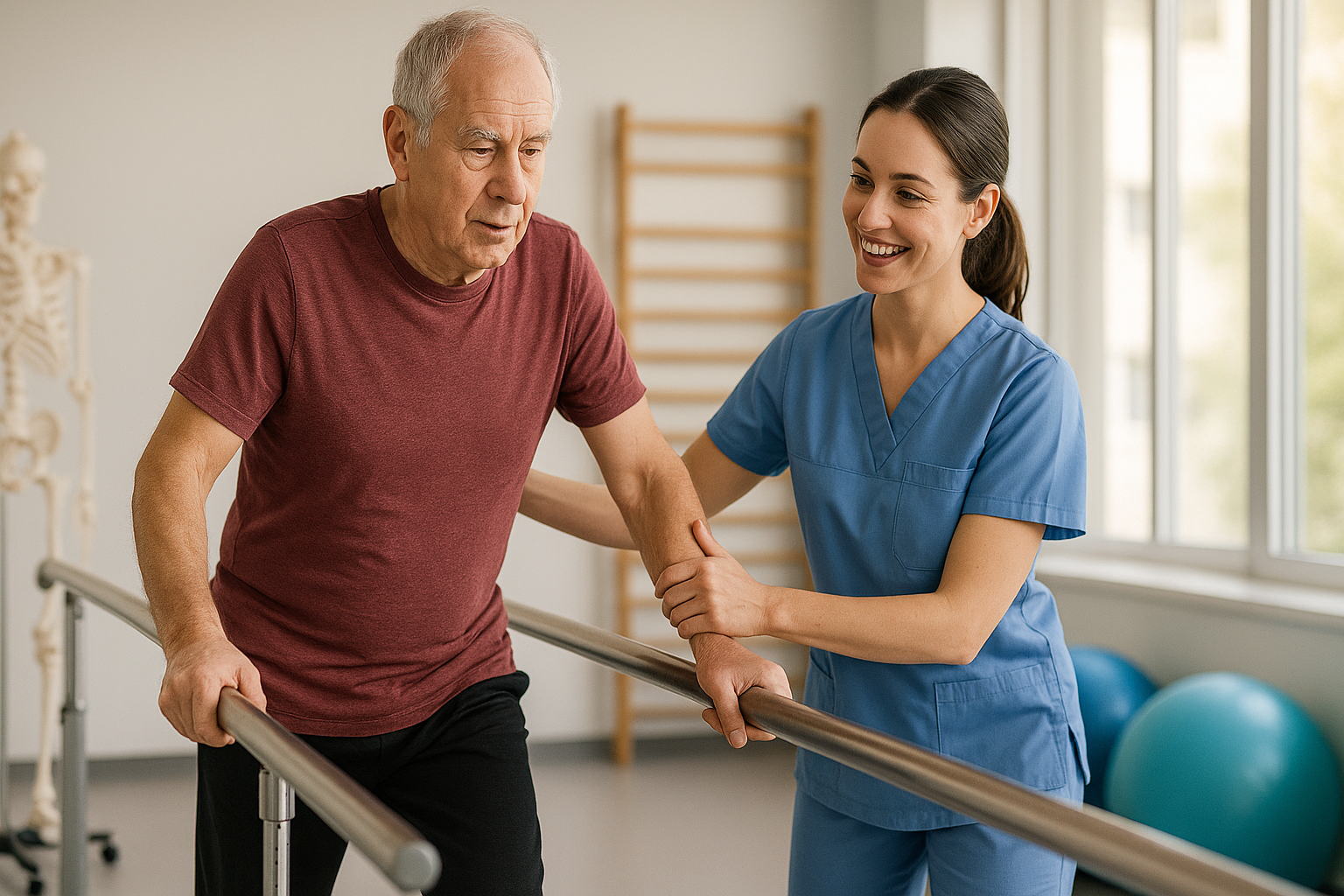
Discover how physiotherapy empowers individuals with Parkinson’s disease to regain control, improve mobility, and enhance daily life through targeted movement strategies and personalized care.
Parkinson’s Disease (PD) is a progressive neurological disorder that primarily affects movement. Characterized by tremors, stiffness, slowness, and impaired balance, Parkinson’s can significantly hinder independence. While there’s currently no cure, one of the most powerful tools to manage symptoms and preserve function is physiotherapy. Through structured exercises, balance training, and gait re-education, physiotherapy helps individuals with Parkinson’s not just survive but thrive.
In this comprehensive guide, we’ll explore the role of physiotherapy in Parkinson’s disease management, its key benefits, effective techniques, and how consistent therapy makes movement not only possible—but powerful.
Understanding Parkinson’s Disease: The Basics
Parkinson’s disease occurs due to the gradual loss of dopamine-producing neurons in the brain, especially in an area called the substantia nigra. Dopamine is critical for smooth and coordinated muscle movements. As levels decline, motor symptoms appear and progress over time.
Primary Motor Symptoms of Parkinson’s:
- Bradykinesia (slowness of movement)
- Muscle rigidity
- Tremor (especially resting tremor)
- Postural instability and balance issues
- Freezing of gait
Non-motor symptoms—like fatigue, depression, sleep disturbances, and cognitive changes—can further complicate daily life. These symptoms can vary widely among individuals, and so must the therapeutic approach.
Why Physiotherapy Matters in Parkinson’s Care
Physiotherapy is more than exercise—it’s movement science applied for independence. As Parkinson’s progresses, muscle stiffness and coordination problems worsen. Without active intervention, many individuals face reduced mobility, falls, and dependency on caregivers.
Physiotherapists specializing in neurological conditions use customized strategies to:
- Improve walking patterns and balance
- Enhance postural control
- Prevent falls and injury
- Boost cardiovascular fitness
- Maintain joint range of motion
- Re-train the brain for more automated movements
For early, mid, and even late-stage Parkinson’s, physiotherapy is one of the few interventions that actively preserves quality of life.
When to Start Physiotherapy?
The best time to begin is early. Even at diagnosis or with mild symptoms, therapy can:
- Build a strong physical baseline
- Educate patients and families on managing future changes
- Delay the onset of mobility limitations
Later-stage patients also benefit greatly. Physiotherapy can improve:
- Transfers (getting up from bed or chairs)
- Safe walking indoors or with assistive devices
- Strategies to overcome freezing episodes
Physiotherapy Assessment: Tailoring the Plan
Every person with Parkinson’s is unique, so treatment starts with a detailed assessment. A neuro-physiotherapist evaluates:
- Muscle tone and strength
- Posture and spinal alignment
- Gait and walking mechanics
- Balance and fall risk
- Flexibility and joint range
- Functional abilities like dressing, sitting, or turning in bed
Based on this, a personalized rehab plan is created with specific goals—ranging from walking independently to dancing again or safely using public transport.
Core Components of Parkinson’s Physiotherapy
Let’s break down the most effective physiotherapy strategies for Parkinson’s management:
1. Gait Training
Walking issues are common in Parkinson’s—short, shuffling steps, stooped posture, and freezing episodes are all challenging. Therapists use:
- Visual and auditory cues (like stepping over lines or walking to a beat)
- Treadmill training with safety harnesses
- Walking with exaggerated arm swings
- Obstacle courses to improve stride length and coordination
These strategies stimulate the brain and encourage more fluid movements.
2. Balance and Fall Prevention
Falls are a leading cause of injury in Parkinson’s. To combat this, physiotherapists incorporate:
- Static and dynamic balance exercises
- Postural training using mirrors and feedback
- Dual-task training (walking while talking or carrying an object)
- Safe fall-recovery techniques
Practicing controlled instability prepares patients for real-life scenarios.
3. Stretching and Flexibility Exercises
Parkinson’s often leads to rigidity in the spine, neck, hips, and limbs. Daily stretching helps reduce stiffness, enhance posture, and ease movement. Focus is placed on:
- Neck and trunk rotation
- Hamstring and calf flexibility
- Shoulder range and chest opening
- Full-body mobility drills
Consistency is key. Physiotherapists may use PNF techniques or assisted stretches to enhance results.
4. Strength Training
While rigidity can dominate, muscle weakness also sets in due to inactivity. Strengthening improves walking, posture, and function.
- Focus on core, lower limbs, and postural muscles
- Use of resistance bands, bodyweight, or light weights
- Functional strengthening like sit-to-stand drills
Physiotherapists ensure exercises are safe and adapted to ability levels.
5. Breathing and Voice Work
Respiratory issues and a softening voice are frequent yet overlooked Parkinson’s symptoms. Physiotherapists often collaborate with speech therapists and incorporate:
- Diaphragmatic breathing exercises
- Chest expansion drills
- Vocal projection techniques
These improve oxygenation, voice clarity, and reduce fatigue.
6. Cueing Techniques to Overcome Freezing
Freezing—a sudden inability to move—is both frustrating and dangerous. Therapists use:
- Laser shoes or floor markings
- Clapping or rhythmic auditory cues
- Mental imagery (visualizing walking)
- Weight shifting before stepping
These tools activate alternate pathways in the brain to restart movement.
7. Home Exercise Programs and Caregiver Training
Empowering patients to continue therapy at home is crucial. Physiotherapists:
- Design simple, repeatable routines
- Educate caregivers on safe assistance techniques
- Suggest adaptive tools (grab bars, walking aids)
Consistency ensures lasting progress outside clinic walls.
Technology in Parkinson’s Rehab: A Growing Ally
Modern physiotherapy now integrates technology for even better outcomes:
- Virtual reality games to improve balance and coordination
- Wearable devices to track movement and remind activity
- Robotic gait trainers
- Home-based tele-rehab sessions
These innovations add motivation and track progress in real time.
Emotional and Social Benefits of Physiotherapy
It’s not just about muscles and movement. Physiotherapy boosts:
- Confidence
- Independence
- Mental health
- Social engagement
Group therapy or community movement classes often foster peer support, reducing isolation and depression common in Parkinson’s patients.
Final Thoughts: Movement Made Possible
Parkinson’s disease doesn’t have to define one’s life or limit possibilities. While the condition may be progressive, physiotherapy is proactive—it gives individuals the tools to take control of their bodies, regain independence, and live with greater dignity and movement.
With a personalized, consistent, and supportive approach, movement truly becomes possible—even joyful—for those living with Parkinson’s.
“Every step forward, no matter how small, is a victory over Parkinson’s. With physiotherapy, hope is in motion.”

- balance therapy for parkinson's
- elderly physiotherapy
- exercises for parkinson's
- gait training in parkinson's
- mobility improvement parkinson's
- movement disorders rehab
- neuro physiotherapy for parkinson's
- non-drug treatment for parkinson's
- parkinson's physiotherapy
- parkinson’s rehab plan
- physiotherapy benefits parkinson's
- physiotherapy for parkinson's disease
- physiotherapy parkinson's care
 Previous Post
 Next Post